
The Danger Isn't Real
And you are free.

One day this week, I took some time to reflect deeply on my fears (what do you do for fun?).
It was morning. I was in the basement, exhausted, trying to psych myself up to lift some heavy weights. I felt overwhelmed by myriad fears, from the immediate sense that I was not strong enough to get through a workout, to the broader worry that I am not a worthy human being, and that as a result, maybe no one really likes me.
These thoughts sound extreme and paranoid when written out, but that’s what my consciousness was sending me.
While I was lost in the maelstrom of these thoughts, a phrase popped into my head:
“The danger isn’t real.”
It actually happened that way.
It was like a sudden flash of lightning; there just long enough for me to read it, and then gone.
I had to pause and really think, “what did I just see?”
Was it something about “danger”? Do I feel endangered? By what? And why and how is it not real?
Why I’m so afraid of “the danger.”
That phrase, “the danger isn’t real,” isn’t something I thought. It simply arrived.
I didn’t even really know what it meant, but I think I have a better idea now.
The fears I was experiencing mostly revolved around judgement. I was judging myself for being too tired to exercise. I was anticipating judgement from others for being imperfect or not acting in ways that would please them.
It’s hard to overstate how dangerous that idea is to me, or at least to parts of me.
Inside of me, I have many scared child parts who learned early on that they were not safe unless they could ensure that everyone around them (and particularly authority figures like parents) were happy with them.
I’ve spent most of my life unconciously scanning every situation and every person for signs that I have displeased them, and then jumping into action to try and defuse the situation.
It’s an exhausting way to live, and not very logical: I know intellectually that most of the time no one is thinking about me at all, let alone constantly judging me and finding me wanting.
I also know that I can’t “control” the feelings or reactions of any other person. People will feel and do what they’re going to feel and do. It’s not within my power to change them.
My child parts don’t know any of that, though. They believe their job is to manipulate everyone so that they feel good, and thus don’t notice that I’m doing something wrong.
A message from something higher than my fear.
When I started to unpack this lightning bolt of “the danger isn’t real,” I understood what it means.
It means that the terrible trouble I have always believed I’m in (or about to be in) is a phantasm.
It means that my happiness and worthiness are not, in fact, dependent on how anyone else acts or even feels about me.
It means that even if people who are close to me are in a bad mood, I don’t have to curl myself into a ball and try to devise a way to quickly forgive me and feel okay again.
None of that is real. The “danger” itself is the invention of a scared child’s mind and body, which sees everyone else’s mood as some kind of deadly tidal wave, always about to rise up and crash down over me, drowning me.
Some part of me suddenly, viscerally understood that truth.
The possibilities that open up when I contemplate that idea (as obvious as it may seem to many of you) are vast.
Imagine not needing to constantly scan every social interaction and moment for signs of terrible danger. Imagine accepting that other people feel things that have nothing to do with me, and that I therefore can allow them to feel those things without needing to intervene.
The sheer amount of time and energy it would free up is hard to calculate.
What’s your danger, and is it really real?
My version of “the danger isn’t real” is about noticing that everyone isn’t angry with me or judging me.
You may not struggle with that at all. But you may feel some other visceral danger that you need to guard against.
For instance, you may be constantly afraid that other people will take away your autonomy — that they will start to depend on you for things, and rob you of your freedom.
Or maybe you think other people will take advantage of your good will and generosity and walk all over you.
Whatever your particular fears about other people, I’d like you to try this experiment:
Say the words “the danger isn’t real” to yourself
Believe those words, just for a moment
Imagine how your life might change if they were true
Nothing’s quite that simple, of course. But I do believe many of us live in a state of constant wariness and fear without noticing it.
Our core fears give us strengths, but not as much as they weaken us.
This can be the source of a lot of our strengths — for me, my fears about other people’s mood make me a sensitive, empathetic person in some contexts because I’m so attuned to what’s happening with other people — but they also leave us exhausted and twitchy a lot of the time.
I’m hoping this momentary flash of insight will help me to disconnect from the need to read and react to everyone else all the time.
That I can find a new mode in which I accept that other people are other people, and that I can do my own thing without worrying about how it affects them (with the new awareness that it mostly doesn’t affect them at all).
As Jamie Foxx once said, “what lies on the other side of fear? Nothing.”
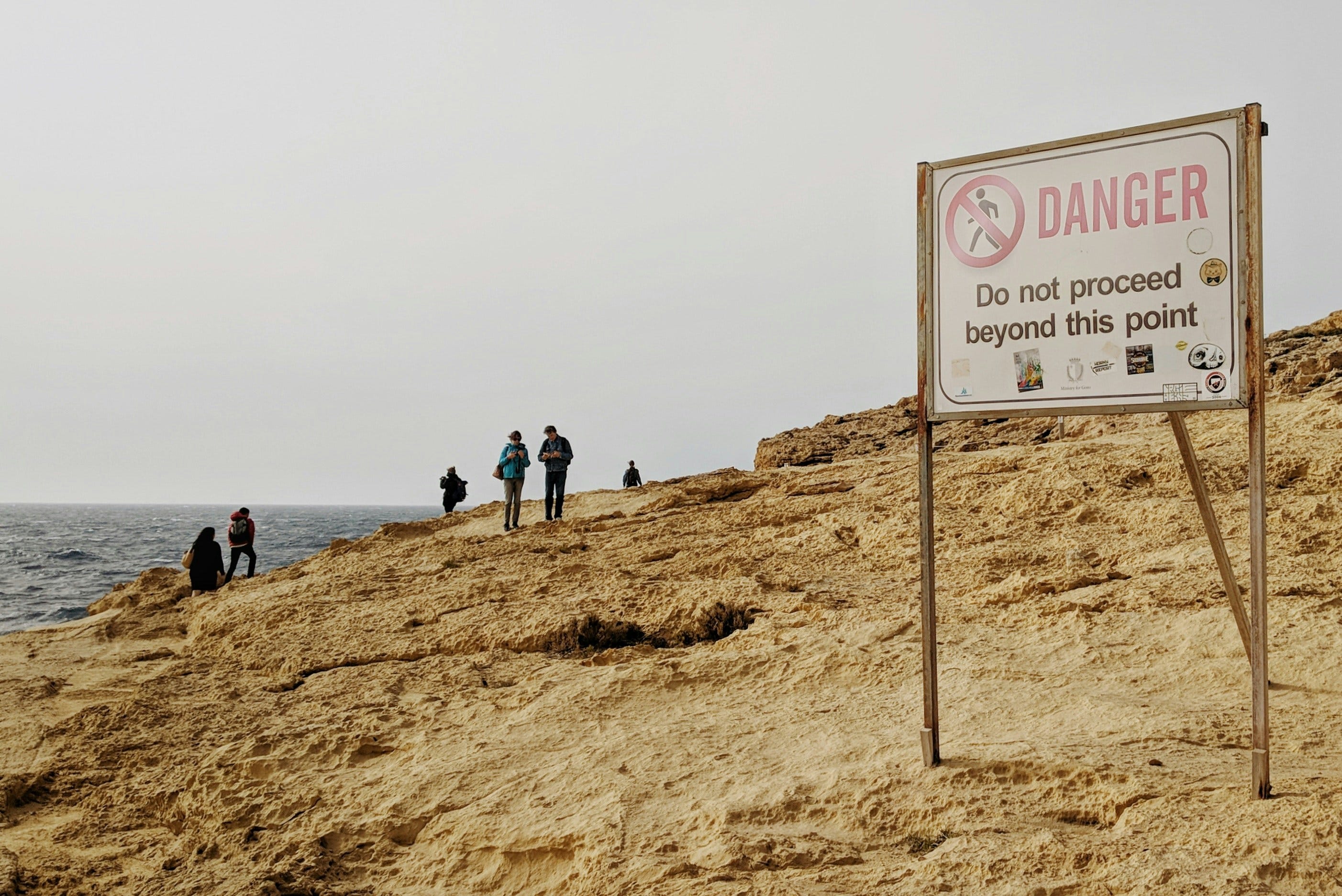
We are all capable of living a bigger life than our fears will tell us we can. Let’s walk past the danger sign and see what’s over there.
What resonated for me was the idea that the danger often feels real long after we’ve stopped needing it. My version is usually “let it go.”
When I remember, I feel lighter almost immediately. Not because anything has changed externally, but because I’ve stopped trying to manage something that was never really mine to carry
The conditioning still shows up. The difference now is that I catch it more often.